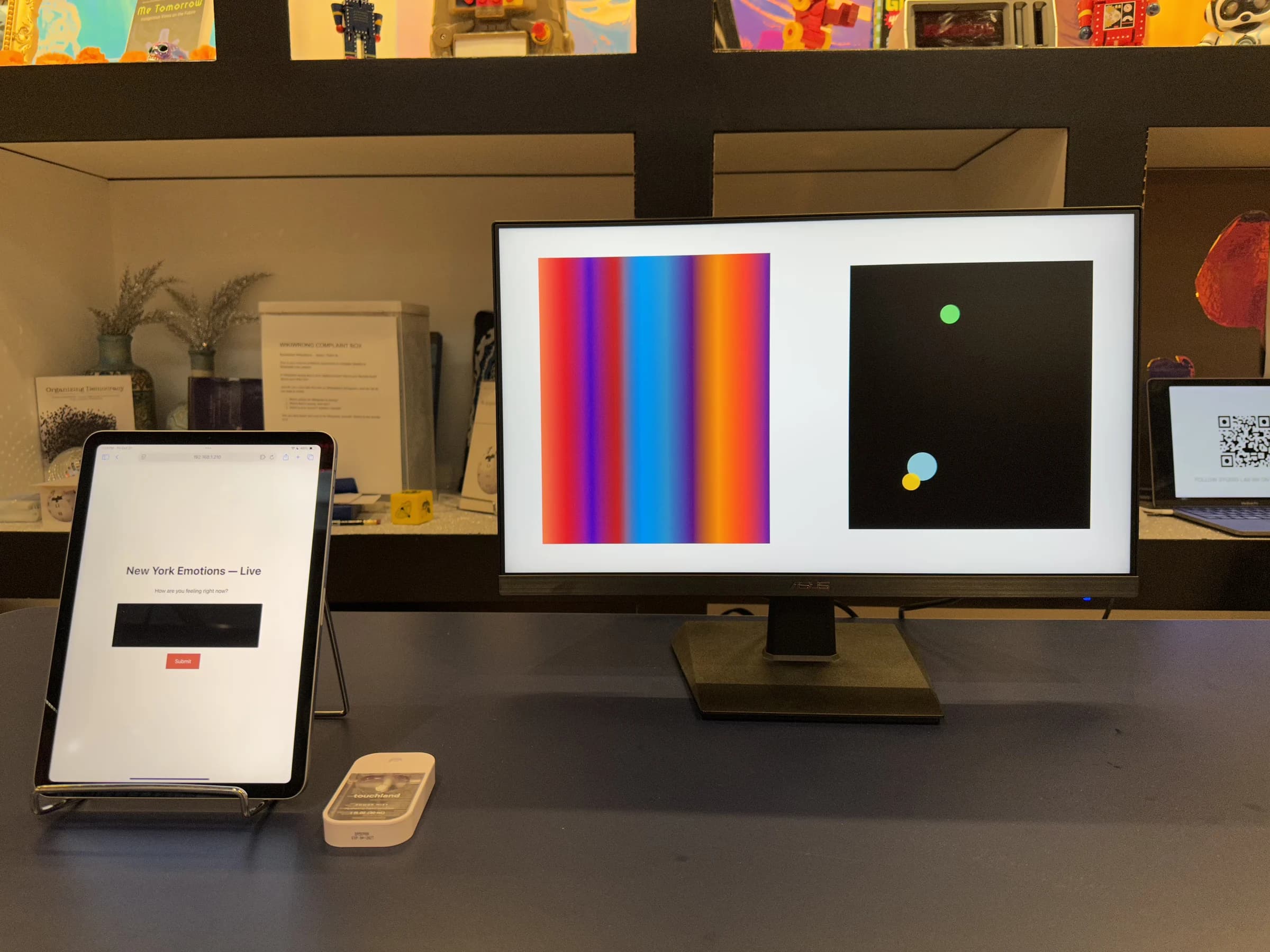
Tell Me How
You Feel: ACG
Emotional data,
in shared space.
Two windows.
Two ways of feeling.
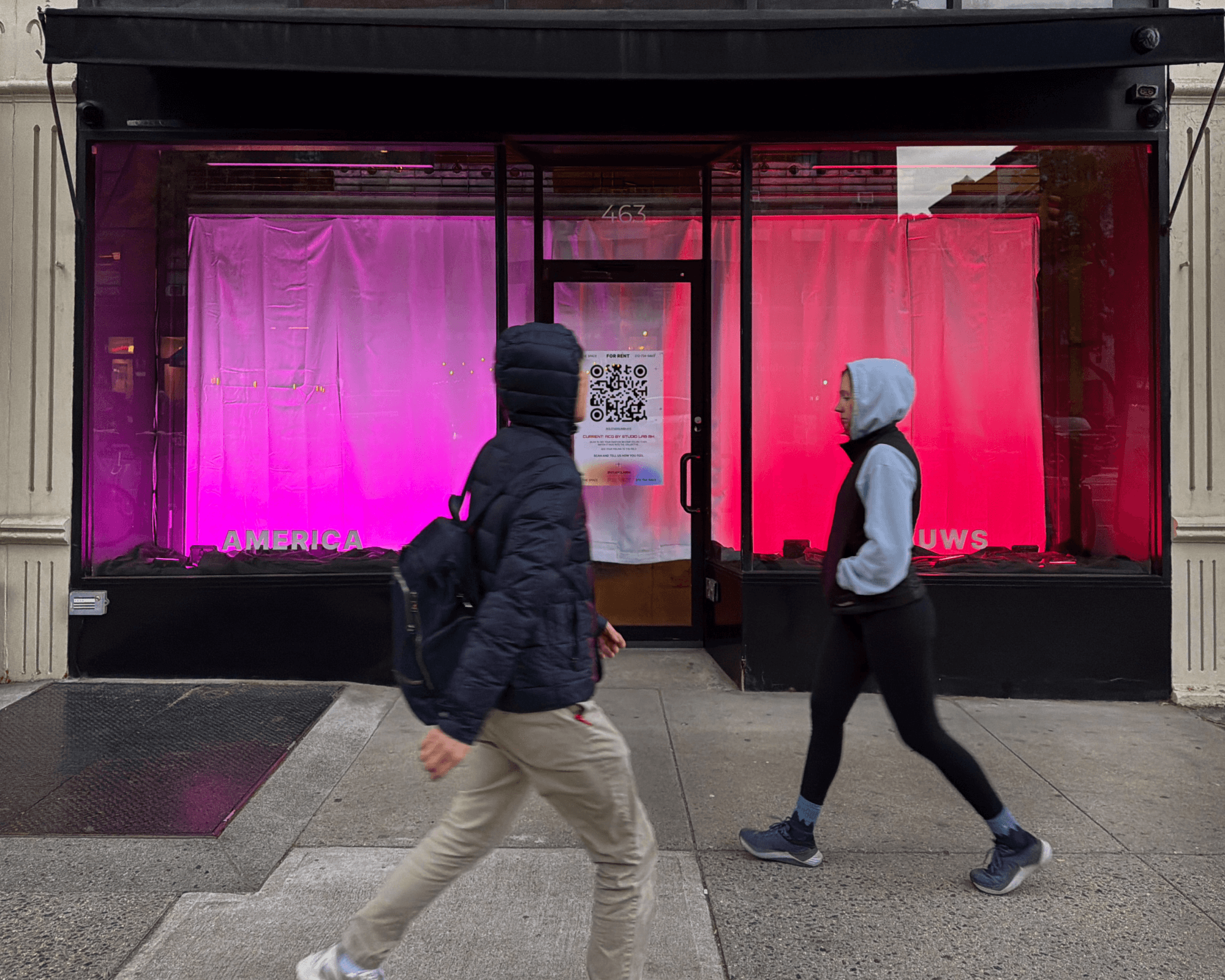
One field begins with an interpretation of public signals. The other begins with what people in the room choose to express. At a New York storefront, the two are placed beside one another, translated into light.

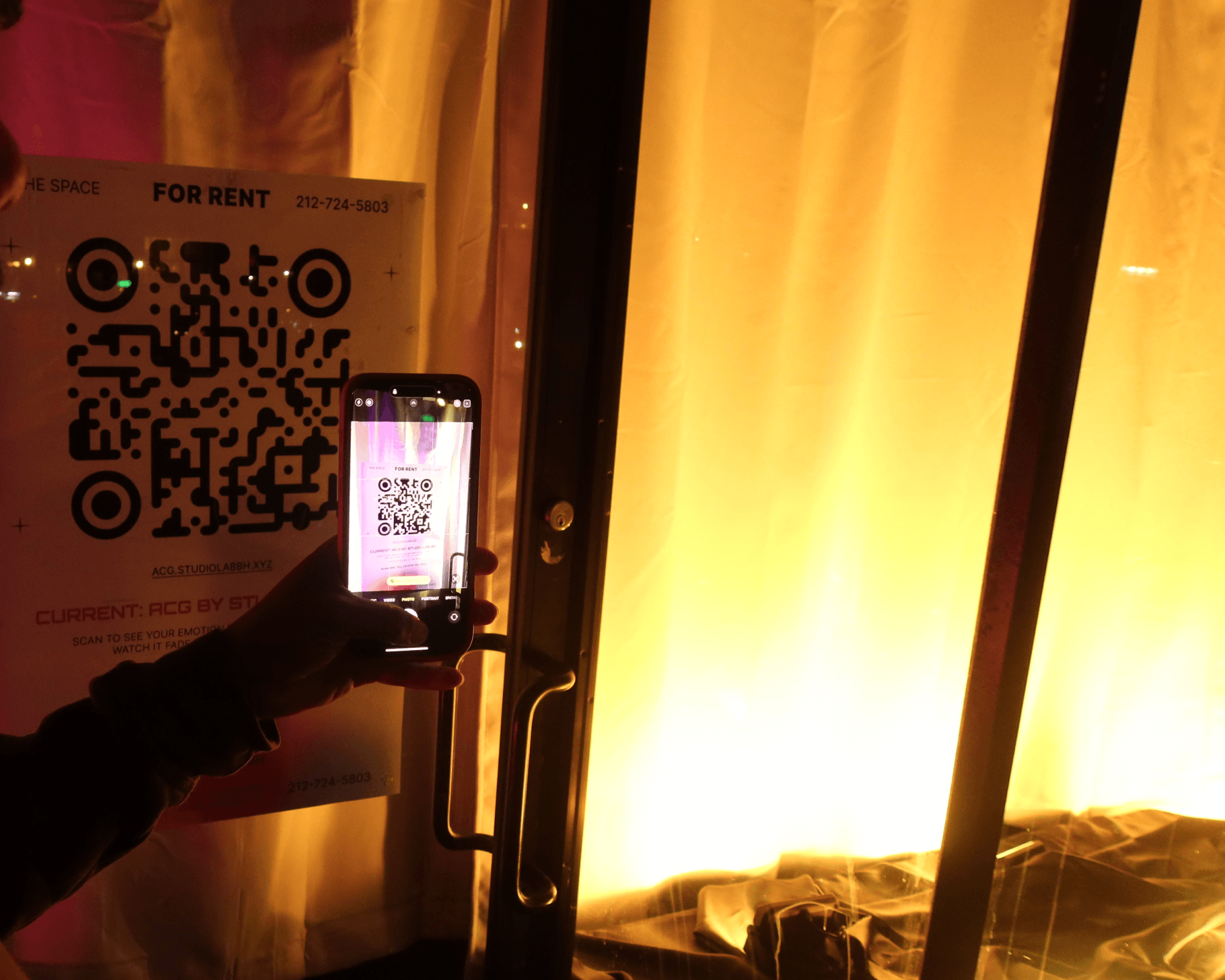
The person looking
can become part
of the work.
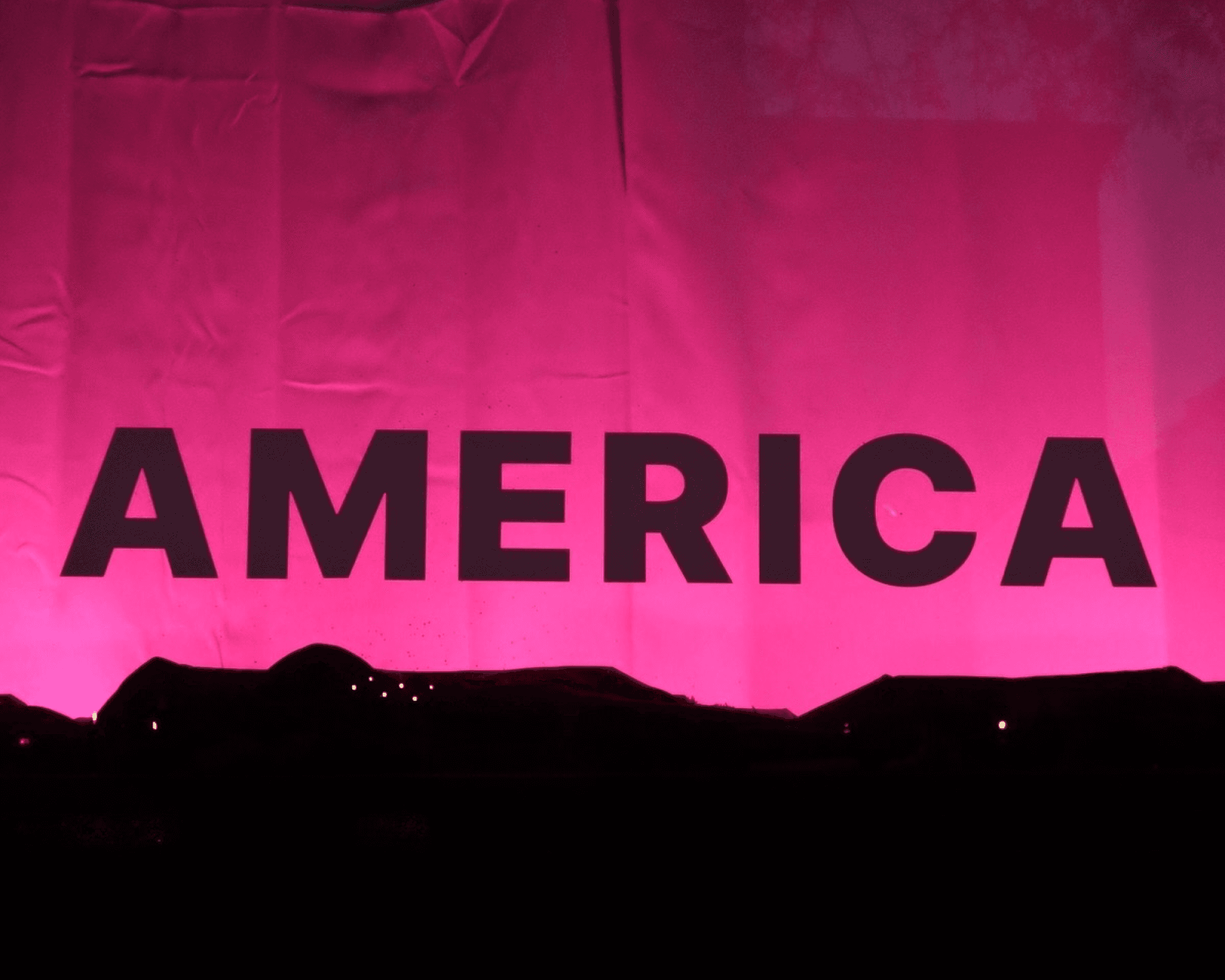
A prompt at the storefront invites a response. A visitor’s declared feeling enters the color mapping and contributes to the local field.
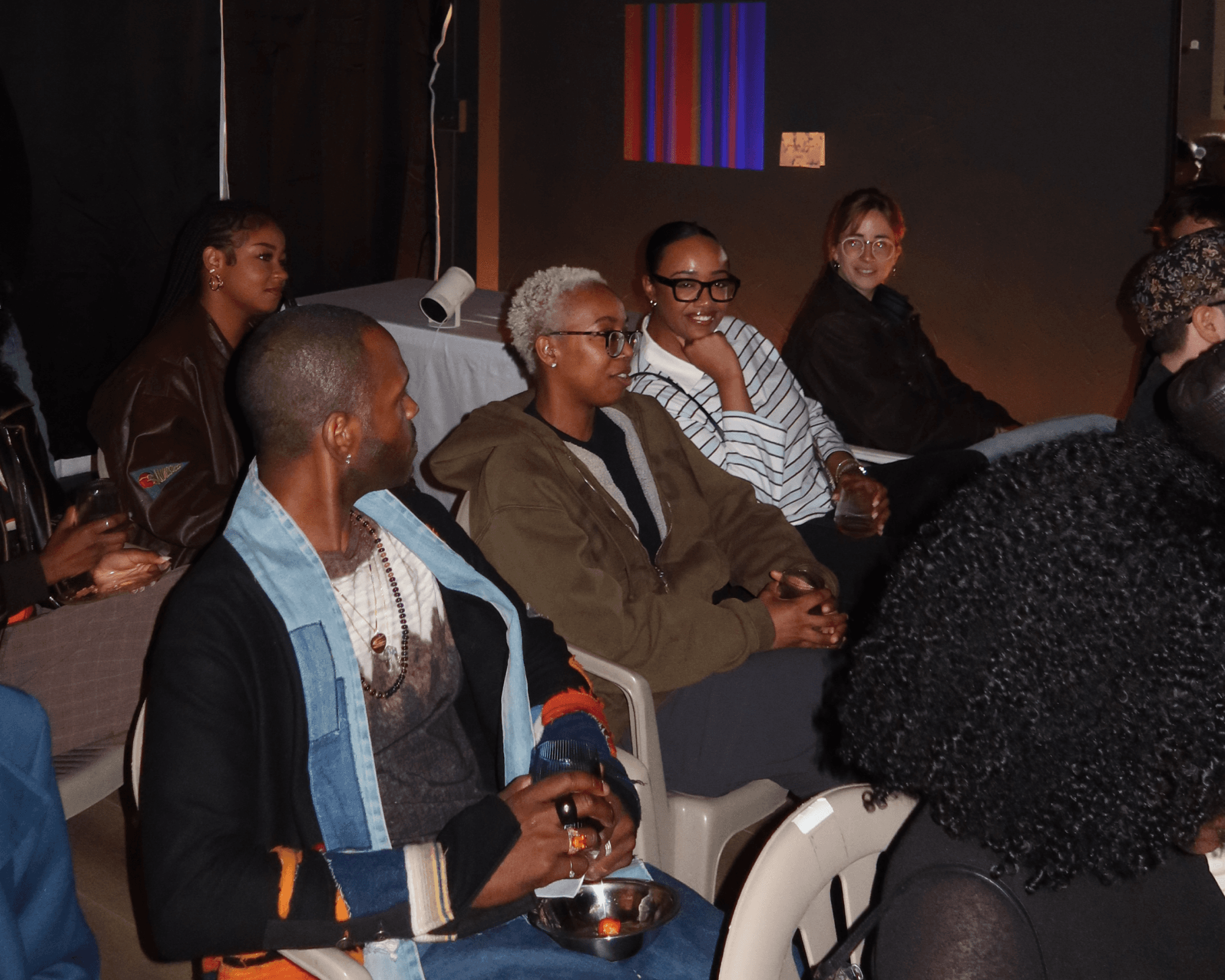
Inside,
a conversation.
Presence, conversation, and participation make the room both the site of the work and one of its inputs.
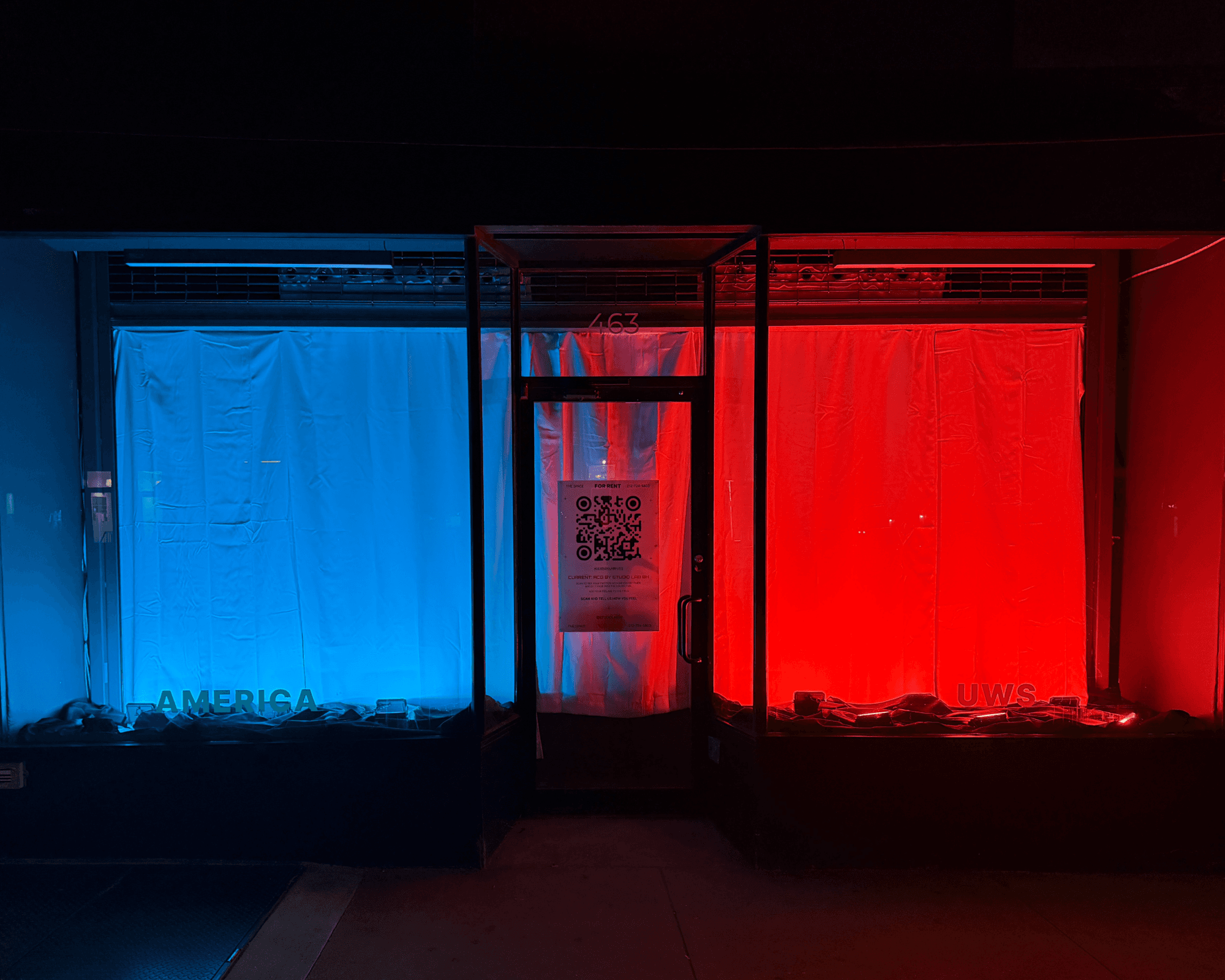
The difference
is part of the reading.
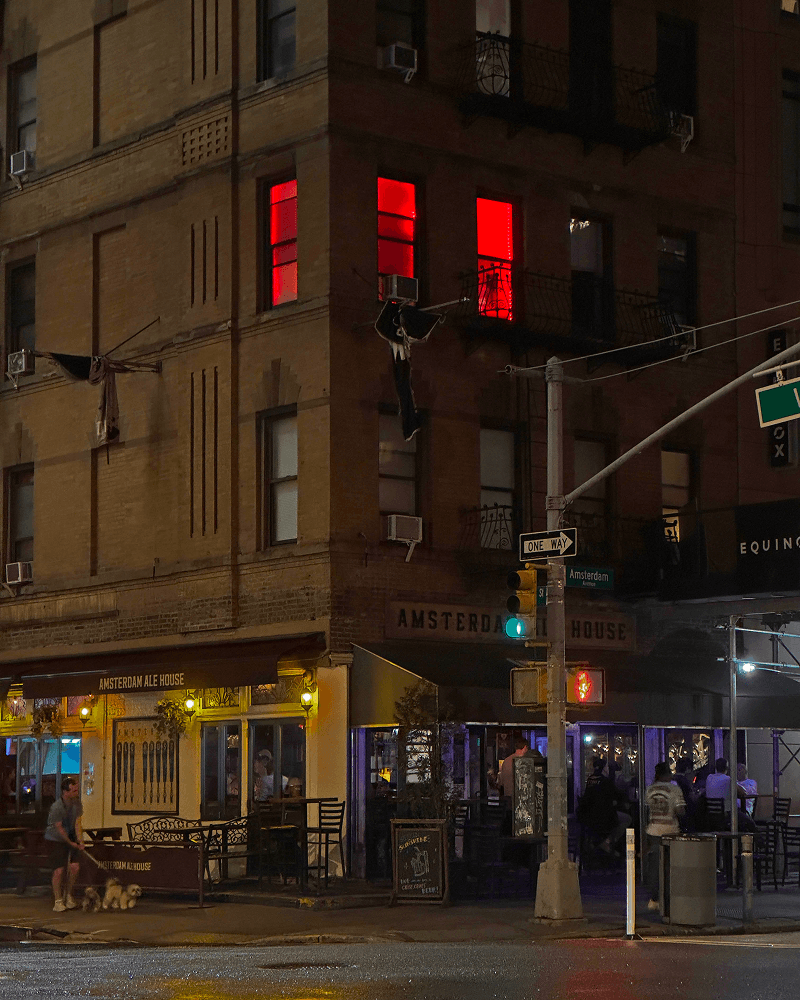
In this nighttime view, the public field is blue and the participant field is red. The windows offer a relationship to look at, rather than a single account of how everyone feels.
Project details
- Period
- 2026–ongoing
- Location
- New York
- Form
- Installation / sensory systems
- Status
- Ongoing series · First activation complete
About the project
What happens when different descriptions of affect are rendered into the same shared environment?
New York Emotions first placed a daily inferred field beside live participant responses during a six-hour study in 2025. Tell Me How You Feel: ACG developed that comparison into an installation in light.
The first storefront activation placed two fields beside one another: one drawn from American Emotions, and another shaped by visitor input. Both were translated into light.
Affective Computational Geometry is the broader thesis and conceptual program. Tell Me How You Feel: ACG is an installation series within it—one way to encounter its questions in shared space.
How the system works
Public signal
- Public / computational signals
- Interpretation through American Emotions
- Light array 01
Participant input
- Visitors declare a feeling
- The response enters the color mapping
- Light array 02
One field begins with an interpretation of public signals; the other begins with what participants choose to express. They are different forms of evidence, even when rendered through the same visual system.
Matching colors represent convergence inside the mapping system. They do not establish that the room and the outside world experienced the same emotion. The artwork asks what that convergence might mean.
System scope
Light is the first rendering method. The broader program explores translation between emotional descriptions and sensory forms, including color, scent, printed matter, and public displays.
Observations & open questions
At The Space, April 28–30, 2026, the two light arrays occupied adjacent storefront windows. The documentation records visitors gathering around an in-room prompt and, in one nighttime view, a blue public-signal field beside a red participant field.
- What do people read into a match—or a difference—between the windows?
- How does sharing a visual grammar change the way these different sources are understood?
- What remains private or unrepresented when a response becomes a color?
Activation record
- Site
- The Space, Upper West Side, NYC
- Dates
- April 28–30, 2026
- Hours
- 24 hours a day
- Format
- Light installation, public prompt, sensory activation
- Series
- Ongoing · Next activation to be announced